


Contents:
Have you ever tried to lose weight? Or did you have to deal with reducing your weight for health reasons? Weight loss and losing weight is an incredibly broad topic that appeals to many people due to its emotional nature and calls many experts to the fore. Everyone knows something about the topic and is not stingy with advice. But are all these tips, from “Just eat half” to “You don’t exercise enough” and “No wonder if you still eat bread and pasta,” actually well-founded? And what really brings ultimate success: low-fat or low-carb or both or best of all, not eating anymore? Before you reach your breaking point, we have taken a close look at the most common myths surrounding weight loss and summarized the current state of research for you.
Myth 1: “Eat half” and the pounds will fall off
Yes and no. It’s not quite that simple. It is true that a calorie deficit is crucial for the body to break down fat. What doesn’t work—at least not in the long term—is simply consuming only half the calories. At first, the body will draw on its reserves, which will probably lead to weight loss at first. However, the body also begins to break down muscle mass relatively quickly—and that is probably not what we want. In addition, the body goes into energy-saving mode, restricts energy expenditure, and if it takes in more energy than it needs, it will store it directly as fat. This mechanism is famously notorious as the yo-yo effect. To avoid this, the calorie deficit must be tailored to the body’s total energy expenditure, i.e., basal metabolic rate plus physical activity level. The basal metabolic rate is the energy your body needs for life-sustaining bodily functions, e.g., breathing, heartbeat, digestion, etc. It depends on age, gender, muscle mass, height, and other factors, and is therefore individual. Your calorie intake should not fall below this required energy. As a rule of thumb for a sustainable and safe calorie deficit, 300–500 kcal per day is recommended. Furthermore, “Eat half” is even dangerous, as the diet is usually not changed at the same time. This can lead to health-threatening deficiencies and/or malnutrition.
Myth 2: You just have to exercise enough to lose weight
False. Unfortunately. Exercise and physical activity can increase your physical activity level in the short term, leading to a calorie deficit, but—and here comes a sobering study—in the long term, regular exercise does not increase energy expenditure, but instead adapts it by saving energy elsewhere [1]. Other studies also show that even with initially increased calorie expenditure, the body adapts to exercise over time and no longer consumes more energy. Exercise can also lead to eating more overall [2]. Exercise without a change in diet or a calorie deficit therefore does not necessarily lead to weight loss.
However, it is important to emphasize that exercise is extremely important for the cardiovascular system, fat distribution, and other metabolic diseases such as type 2 diabetes.
It is also important to do more strength training sessions than endurance sessions. Strength training builds muscle mass, and muscle mass increases the basal metabolic rate. This helps counteract the yo-yo effect.
Myth 3: Eating after 6 p.m. makes you gain weight
This myth is controversial and depends on various factors. If you eat your only meal after 6 p.m. and remain below your calorie requirements, you are very likely to lose weight rather than gain it. If you are more of a night owl and eat late, but skip breakfast and remain below your calorie requirements, you are also unlikely to gain weight. However, if you consume too many calories overall, the time of day you eat plays a minor role. In rodents, studies have shown that weight gain was more likely when they were fed during their resting phase. A study involving humans found that eating after 8 p.m. was associated with a higher BMI [3]. The individual studies therefore suggest a tendency, but are not universally applicable.
However, there are actually many studies on the question of what time you should eat if you want to lose weight. The study results here are quite clear: it is easier to lose weight if you do not eat or only eat low-calorie meals in the evening. The reason is that adipose tissue stores or breaks down fat at certain times throughout the day. In studies, overweight individuals who ate later in the evening lost significantly less weight than those who ate earlier [4].
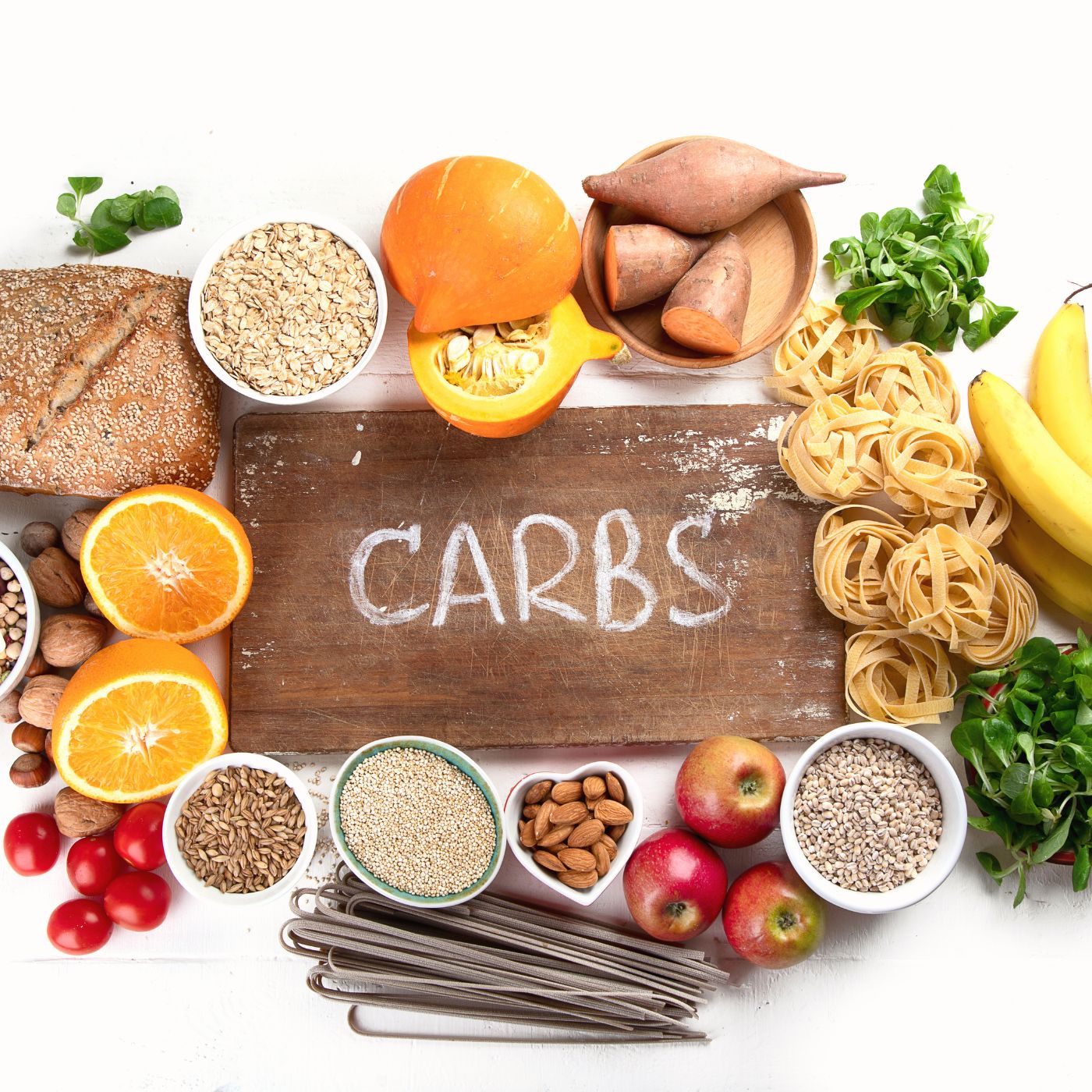
Myth 4: Carbohydrates make you fat
Well, it depends. Specifically, on the type of carbohydrates. Carbohydrates are the body’s most important energy source, with glucose as its main energy supplier. If this glucose is well packaged in long chains and fiber and is slowly made available to the body, carbohydrates can keep you full for a long time and are an important part of a balanced, healthy diet. It is not for nothing that it is recommended to meet at least 50% of your daily energy requirements from carbohydrates. You can find long-chain carbohydrates, for example, in whole grains, legumes, and vegetables. Carbohydrates that are actually risk factors for obesity and associated diseases are those from refined flour products such as pasta or white bread, refined sugar, syrups, or sugary soft drinks. The glucose from these is absorbed immediately, leading to blood sugar and insulin spikes, which in turn can lead to cravings and increase the risk of being overweight and developing subsequent conditions such as insulin sensitivity and type 2 diabetes.
Myth 5: Fat is unhealthy
No, if you consume healthy fats in moderation, fat is a vital nutrient with numerous functions in the body and health benefits. You can find healthy plant fats, which mainly consist of unsaturated fatty acids, in oil-bearing fruits such as olives, as well as in nuts and seeds and their oils. Here, you should pay particular attention to foods rich in omega-3 fatty acids, such as walnuts, flaxseed, or linseed oil. If you want to consume animal-based foods, some types of fish are good options.
Saturated fatty acids are considered unhealthy and occur mainly in animal-based or highly processed foods. If consumed in excess, they can have a negative effect on cholesterol and blood lipid levels. You should also avoid trans fatty acids. These are produced from unsaturated fatty acids that are heated to high temperatures, for example by frying (French fries, chips, pastries, etc.).
It is recommended to meet at most 30% of your energy requirements from fats. As a guideline for a purely plant-based diet, 2–3 tablespoons of plant oils (rapeseed oil, linseed oil, walnut oil, olive oil) are recommended, supplemented by a handful of nuts or seeds.
Myth 6: Only low-carb leads to weight loss
No, studies show that both low-carb and high-carb (low-fat) diets are equally suitable for losing weight in the long term. The advantage of reducing carbohydrates is faster weight loss compared to reducing fat. This can be beneficial for certain metabolic diseases. However, a disadvantage can be reduced performance and faster fatigue. In a low-carb diet, the body switches from its main energy supplier, glucose, to ketone bodies. These are formed from adipose tissue once glucose stores are depleted, and in the longer term also from muscle tissue.
A high-carb diet has the advantage of providing more energy for endurance sports and a high intake of fiber when healthy carbohydrates from whole foods are consumed. A high intake of fiber is extremely important for the gut microbiota and good digestion. Weight loss takes more time, but for many people, a high-carb diet is also significantly easier to follow and more sustainable in the long term [5].
Finally
You are beautiful just the way you are! Your body is a marvel and performs immense feats every day—whether you are chilling in front of the TV or running a marathon. The secret recipe for your dream weight is therefore: take the pressure off, don’t stress, and look at every square inch of your body with kindness and gratitude. Weight comes and goes; health and mental well-being come first. And even if you don’t think you’re that great right now—we are absolutely sure that someone else finds you just as beautiful as you are, inside and out!