







from our products
reset
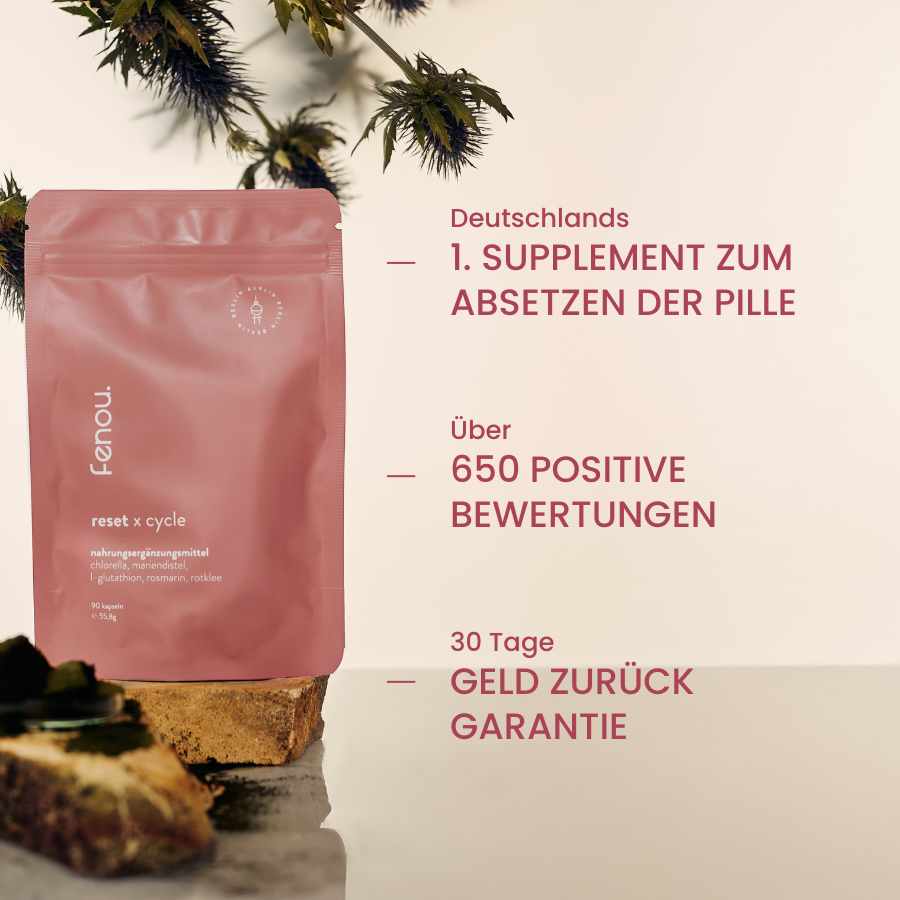
 to reduce side effects when stopping the pill
to reduce side effects when taking the pill
contributes to normal skin (zinc)* and can thus reduce the appearance of pimples or acne
supports liver activity (choline)*, hormonal activity (Vit B6)*, healthy energy metabolism (iron)*
In stock - Arrives in 2-3 days
Wie viel pro Lieferung?
Wie viel möchtest du?
3 for 2 Free shipping Cancel anytime
Early-Black-Friday-Preise werden im Warenkorb automatisch abgezogen.


30 Tage
Geld zurück Garantie

Kostenloser
Versand ab 70€ (DE & EU)

What makes the product special
- Biotin, iron, magnesium, manganese, niacin, pantothenic acid, riboflavin, vitamin B1, vitamin B6, vitamin B12 and vitamin C contribute to normal energy metabolism.
- Biotin, folate, magnesium, niacin, vitamin B1, vitamin B6, vitamin B12 and vitamin C contribute to normal psychological function.
- Iron, folic acid, selenium, vitamin A, vitamin B12, vitamin B6, vitamin C and zinc contribute to the normal function of the immune system.
- Selenium contributes to normal thyroid function. Pantothenic acid contributes to normal synthesis and metabolism of steroid hormones, vitamin D and some neurotransmitters.
- Choline contributes to maintaining normal liver function.
- Vitamin B6 contributes to the regulation of hormonal activity.
- Zinc contributes to normal fertility and reproduction.
- Zinc contributes to maintaining normal testosterone levels in the blood.


100% Vegan
Plant-based ingredients, gluten- and lactose-free, no additives

Laboratory tested in DE
Free from pesticides and heavy metals, cruelty-free

Scientifically developed
Based on current studies and developed with experts

Recyclable Materials
Sustainable refill system, biodegradable
EASY APPLICATION AND DOSING

CROWD
Consume 3 capsules daily with enough water. One sachet reset contains 90 capsules. This corresponds to a monthly ration.

CONSUMPTION
Ideally consume the capsules with a meal and at the same time every day.

DURATION OF CONSUMPTION
For maximum effect, we recommend consuming one course of treatment for a maximum of 3 months, especially after stopping the pill or while you are still taking it.
Over 80,000 happy women
who were able to resolve their complaints with our products and are happy.






High-quality active ingredients for your health
Developed with experts in the fields of gynecology, naturopathy, and nutritional science. The selected ingredients are based on the latest scientific evidence.
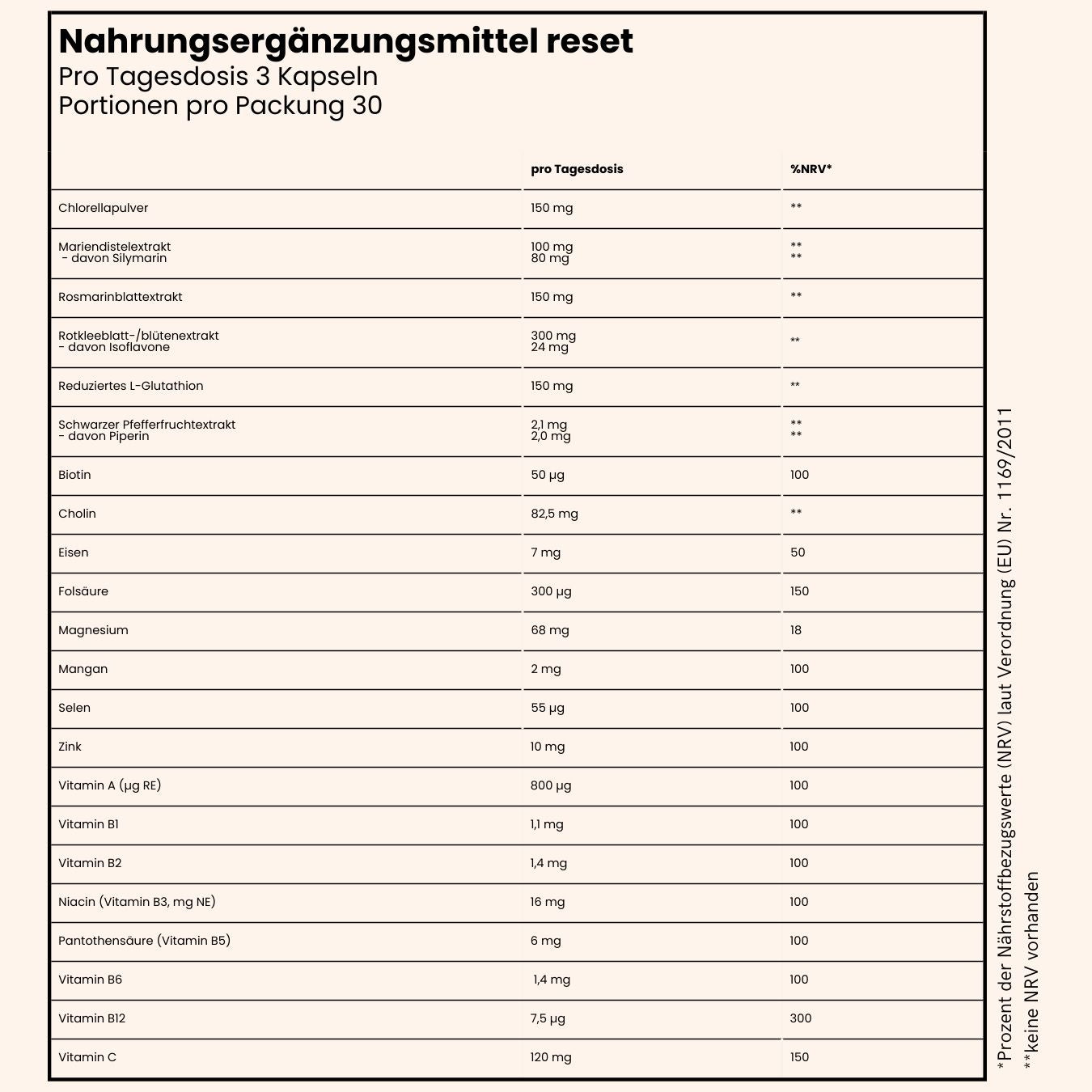
|
per daily dose (3 capsules) |
%NRV* | |
| Chlorella powder |
150 mg |
** |
|
Milk Thistle Seed Extract - of which silymarin |
100 mg 80 mg |
** ** |
| Rosemary leaf extract |
150 mg |
** |
|
Red clover leaf/flower extract - of which isoflavones |
300 mg 24 mg |
** ** |
| Reduced L-Glutathione |
150 mg |
** |
|
Black Pepper Fruit Extract - of which piperine |
2.1 mg 2.0 mg |
** ** |
| Biotin |
50 µg |
100 |
| choline |
82.5 mg |
** |
| Iron |
7 mg |
50 |
| Folic acid |
300 µg |
150 |
| Magnesium |
68 mg |
18 |
| Manganese |
2 mg |
100 |
| Selenium |
55 µg |
100 |
| Zinc |
10 mg |
100 |
| Vitamin A (µg RE) |
800 µg |
100 |
| Vitamin B1 |
1.1 mg |
100 |
| Vitamin B2 |
1.4 mg |
100 |
| Niacin (Vitamin B3, mg NE) |
16 mg |
100 |
| Pantothenic acid (vitamin B5) |
6 mg |
100 |
| Vitamin B6 |
1.4 mg |
100 |
| Vitamin B12 |
7.5 µg |
300 |
| Vitamin C | 120 mg | 150 |
*Percent of the nutrient reference values (NRV) according to Regulation (EU) No.1169/2011
**No NRV available
Ingredients:
Red clover leaf and flower extract (8% isoflavones) 16%, magnesium carbonate, coating agent: hydroxypropylmethylcellulose (vegetable capsule shell), choline bitartrate, chlorella powder (contains sulphites) 8%, reduced L-glutathione 8%, rosemary leaf extract 8%, Calcium L-ascorbate, milk thistle seed extract (80% silymarin) 5%, iron citrate, zinc citrate, nicotinamide, manganese citrate, calcium D-pantothenate, retinyl acetate, pyridoxal 5'-phosphate, black pepper fruit extract (95% piperine), riboflavin 5'-phosphate, sodium, thiamine hydrochloride, calcium L-methylfolate, sodium selenite, D-biotin, Methylcobalamin, methylfolate, sodium selenite, D-biotin, methylcobalamin
Chlorella is a microalgae. In addition to their good nutritional composition, studies have also shown liver-protective properties, which are associated with an increase in reduced glutathione and antioxidant capacity. We use organically grown chlorella powder.
The milk thistle (Silybum marianum) belongs to the daisy family. Their seeds contain the substance silymarin. The antioxidant, anti-inflammatory and liver-protective properties of silymarin have been researched in numerous studies. The milk thistle seed extract we use contains 80% silymarin.
The leaves of rosemary (Salvia rosmarinus) are used for the rosemary leaf extract. The liver-supporting, antioxidant and anti-inflammatory effects of rosemary extract have been demonstrated both in animal experiments and in clinical studies. It supports the normal metabolism of steroid hormones by stimulating bile production. Rosemary extract can regulate estradiol metabolism.
Red clover (Trifolium pratense) belongs to the legume family and is rich in isoflavones. It is widely used in gynecology. In animal and human studies, red clover was able to regulate estrogen and progesterone levels, thereby alleviating menopausal symptoms and reducing the risk of breast cancer. In addition, red clover appears to have a positive effect on glucose metabolism.
Glutathione is a tripeptide that is one of the most important antioxidants in our body. We use it in its reduced, active form. It acts as a scavenger of free radicals in all cells of the body and is present in particularly high concentrations in the liver. There it is responsible for the detoxification function of the liver. The need for glutathione can be increased with increased oxidative stress and high liver activity, z.B. when taking medication. In foods, glutathione is mainly found in fruits and vegetables. Asparagus in particular is mentioned as a very good supplier."
The fruit of black pepper (Piper nigrum) is said to improve the bioavailability and absorption rate of various pharmacologically active substances and is therefore z.B. also often used in Ayurveda.
Biotin is an important component of many enzymes. A deficiency therefore becomes noticeable in different ways.Hair loss, skin problems, but also psychological problems can occur z.B. consequences of a lack of biotin. Biotin is found in many plant foods, z.B. in legumes, yeast flakes, whole grains, mushrooms or avocado.
Choline is a water-soluble vitamin and is classified as one of the B vitamins. It plays an important role in many of the body's metabolic processes, including the liver. It can be synthesized by the body itself, but not in sufficient quantities. Choline is found in foods such as egg yolks, soybeans, liver and nuts.
Iron is an important cofactor for many enzymes and plays an important role in the function of red blood cells. Large amounts of iron are regularly lost through menstrual bleeding. Important plant sources of iron are whole grains, legumes, nuts, seeds and kernels, dark green leafy vegetables and dried fruit. It is important that these are not consumed in combination with foods that inhibit absorption (z.B. Coffee, black tea, green tea). It is better to combine it with vitamin C or foods rich in fruit acid.
Folic acid is only stored in small amounts in the body. A low supply becomes noticeable within a very short time. Complaints such as fatigue, irritability, anxiety or depressive moods are particularly common. The pill increases the need for folic acid. After stopping it, it can take up to 3 months until normal blood levels are reached. This is particularly important if you stop taking the pill because you want to have children. Folic acid is found in many plant foods such as legumes, whole grains, cereal germs, dark green leafy vegetables, cabbage and nutritional yeast. Since folic acid is a very sensitive vitamin, you should make sure to include as fresh and unprocessed foods as possible in your diet.
Magnesium plays an important role in the functioning of the nervous system. His need is increased by taking the pill and thus carries an increased risk of osteoporosis, migraines or thrombosis. Magnesium can be used to relieve menstrual cramps. Especially in combination with vitamin B6, PMS symptoms such as emotional fluctuations can be reduced. Magnesium is found in many plant foods. Good sources include legumes, whole grains, seeds, seeds, nuts, dark green leafy vegetables and mineral water.
Manganese is one of the minerals that is often neglected in the diet and has a particular impact on the sex hormone system. Manganese deficiency can z.B. reduce fertility and affect the health of skin and connective tissue. Manganese, in combination with calcium, can reduce symptoms of PMS. Foods such as whole grains, oatmeal, legumes, nuts, cereal sprouts and seeds are good sources of manganese.
Selenium is part of the antioxidant processes in the body and enables the function of thyroid hormones. A deficiency can manifest itself in many ways and can result in fertility problems. German soils tend to be low in selenium, with significant amounts z.B. in Brazil nuts, legumes and whole grains.
Zinc plays a major role in the overall metabolism. Its function as a cofactor in countless metabolic pathways, in the immune system, in the formation of sex hormones and the healthy structure of skin, hair, nails, mucous membranes, etc. is particularly important. In general, zinc intake is considered critical. The need for zinc is further increased by taking the pill. Good plant sources of zinc are legumes, whole grains, corn, oat flakes, nuts and dark green leafy vegetables.
Vitamin A is necessary for the body's own synthesis of sex hormones and is particularly important for the healthy protective function of the skin and the structure of tissue u.a. in the urinary and genital tract and the healthy function of the mucous membranes. The need for vitamin A can be increased by various factors, z.B. Stress, inflammation, high sun exposure, smoking or drinking alcohol. Vitamin A is found in plant foods as a precursor in the form of carotenoids. These can be found in all kinds of fruits and vegetables, especially z.B. in sweet potatoes, carrots, spinach or even apricots or peaches.
The need for the individual B vitamins is increased when taking the pill. Vitamin B1 has only a small storage capacity in the body and should therefore be consumed daily. Vitamin B1 is important for the function of the nervous system and healthy psychological processes, ensures effective wound healing and thus contributes to healthy skin. You can find vitamin B1 in yeast flakes, whole grains, oilseeds such as sunflower or pumpkin seeds, but also in legumes and potatoes.
Vitamin B2 is an important cofactor in the metabolism of the 3 main nutrients protein, carbohydrates and fat. His needs are increased by taking the pill. A vitamin B2 deficiency is suspected to be a contributing cause of migraines and headaches when taking pills. Good sources of vitamin B2 are mushrooms, nutritional yeast, dark green leafy vegetables and nuts. Vitamin B2 is relatively sensitive to heat, but dissolves in water when prepared. So also use the cooking water from vegetables, z.B. as a sauce or broth.
Niacin plays a major role as an antioxidant, especially in the liver. A deficiency can negatively affect both skin health and nervous system function. Consequences can be z.B. Headaches, anxiety, fatigue, etc. Niacin can be produced in the body from tryptophan. You can find tryptophan in protein-rich foods such as nuts, legumes, whole grains and dark green leafy vegetables. Niacin is also found directly in legumes such as peanuts, cashews or z.B. Champignons.s Vegetable cooking water, z.B. as a sauce or broth.
Pantothenic acid is involved in the production of sex hormones and steroid hormones such as cortisol. It therefore plays a role in hormonal balance and the body's stress response. A defect arises u.a. noticeable in fatigue and poor wound healing. Pantothenic acid is found in many foods such as legumes, whole grains, dark green leafy vegetables or nuts.
Vitamin B6 has a major influence on serotonin metabolism and thus on the risk of depression. It enables the conversion of tryptophan to niacin and is essential for healthy nerve cells, a functioning glucose metabolism and a healthy vascular system. Its need is increased by taking the pill and a deficiency is associated with an increased risk of thrombosis. A high consumption of animal-based, protein-rich foods additionally increases the need for vitamin B6. Good plant sources include potatoes, bananas, legumes, nutritional yeast, dark green leafy vegetables and nuts. Make sure to include raw vegetables in your diet, as vitamin B6 is very sensitive to heat.
Vitamin C is one of the vitamins whose requirement is increased by taking estrogen-containing preparations such as the birth control pill. You need vitamin C for various metabolic processes, u.a. the immune system, thyroid function, liver function and for a healthy structure of skin, hair and connective tissue. Vitamin C has antioxidant and anti-inflammatory properties. You can find vitamin C in many types of fruit and vegetables, especially wild fruits such as sea buckthorn or rose hips, but also in citrus fruits, cabbage and even potatoes

Organic chlorella powder
Chlorella is a microalgae. In addition to their good nutritional composition, studies have also shown liver-protective properties, which are associated with an increase in reduced glutathione and antioxidant capacity. We use organically grown chlorella powder.
Organic chlorella powder
Chlorella is a microalgae. In addition to their good nutritional composition, studies have also shown liver-protective properties, which are associated with an increase in reduced glutathione and antioxidant capacity. We use organically grown chlorella powder.

Milk thistle seed extract
Milk thistle (Silybum marianum) belongs to the daisy family. Their seeds contain the substance silymarin. The antioxidant, anti-inflammatory and liver-protective properties of silymarin have been researched in numerous studies. The milk thistle seed extract we use contains 80% silymarin.

ROSEMARY LEAF EXTRACT
The leaves of rosemary (Salvia rosmarinus) are used for the rosemary leaf extract.
ROSEMARY LEAF EXTRACT
The leaves of rosemary (Salvia rosmarinus) are used for the rosemary leaf extract.

Red clover extract
Red clover (Trifolium pratense) belongs to the legume family and is rich in isoflavones. It is widely used in gynecology. In animal and human studies, red clover was able to regulate estrogen and progesterone levels, thereby alleviating menopausal symptoms and reducing the risk of breast cancer. Red clover also appears to have a positive effect on glucose metabolism.

L-Glutathione, reduced
Glutathione is a tripeptide and one of the most important antioxidants in our body. We use it in its reduced, active form. It acts as a free-radical scavenger in all body cells and is found in particularly high concentrations in the liver, where it is responsible for the liver's detoxification function. The need for glutathione can be higher in cases of increased oxidative stress and high liver activity, for example when taking medication. In food, glutathione is found mainly in fruit and vegetables; asparagus in particular is cited as a very good source.

BLACK PEPPER FRUIT EXTRACT
The fruit of black pepper (Piper nigrum) is said to improve the bioavailability and absorption rate of various pharmacologically active substances, which is why it is often used as a complement, for example in Ayurveda.
BLACK PEPPER FRUIT EXTRACT
The fruit of black pepper (Piper nigrum) is said to improve the bioavailability and absorption rate of various pharmacologically active substances, which is why it is often used as a complement, for example in Ayurveda.

Biotin
Biotin is an important component of many enzymes, so a deficiency shows up in different ways: hair loss, skin problems and even psychological complaints can be consequences of a biotin deficiency. Biotin is found in many plant foods, for example pulses, nutritional yeast flakes, wholegrain cereals, mushrooms and avocado.
Choline
Choline is a nutrient that must be obtained through diet, but is often inadequate in people with a uterus. Choline plays an important role in many metabolic processes, especially in supporting the liver in its function in detoxifying foreign substances, such as synthetic hormones. A choline deficiency negatively affects inflammatory parameters. These are also increased when taking pills. Choline is mainly found in animal foods, but legumes (especially soybeans), seeds and nuts are also good sources.

Iron
Iron is an important cofactor for many enzymes and plays a significant role in the function of red blood cells. Large amounts of iron are regularly lost through menstrual bleeding. Important plant sources of iron are wholegrain cereals, pulses, nuts, seeds and kernels, dark green leafy vegetables and dried fruit. It is important not to eat these together with foods that inhibit absorption (e.g. coffee, black tea, green tea). It is better to combine them with vitamin C or foods rich in fruit acids.

FOLIC ACID
Folic acid is only stored in small amounts in the body. The pill increases the need for folic acid. After stopping it, it can take up to 3 months until normal blood levels are reached. This is particularly important if you stop taking the pill because you want to have children. Folic acid is found in many plant foods such as legumes, whole grains, cereal germs, dark green leafy vegetables, cabbage and nutritional yeast. Since folic acid is a very sensitive vitamin, you should make sure to include as fresh and unprocessed foods as possible in your diet.

MAGNESIUM
Magnesium plays an important role in the functioning of the nervous system. Magnesium is found in many plant foods. Good sources include legumes, whole grains, seeds, seeds, nuts, dark green leafy vegetables and mineral water.
MAGNESIUM
Magnesium plays an important role in the functioning of the nervous system. Magnesium is found in many plant foods. Good sources include legumes, whole grains, seeds, seeds, nuts, dark green leafy vegetables and mineral water.

Manganese
Manganese is one of the minerals that often falls short in our diet and has a particularly strong effect on the sex hormone system. A manganese deficiency can, for example, reduce fertility and affect the health of skin and connective tissue. Combined with calcium, manganese can reduce PMS symptoms. Foods such as wholegrain cereals, oats, pulses, nuts, cereal germ and seeds are good sources of manganese.

Selenium
Selenium is part of the body's antioxidant processes and enables thyroid hormones to function. A deficiency can show up in many ways; one consequence can be fertility problems. German soils are rather low in selenium; significant amounts are found, for example, in Brazil nuts, pulses and wholegrain cereals.

ZINC
Zinc has a large role in the overall metabolism. Its function as a cofactor in countless metabolic pathways, in the immune system, in the formation of sex hormones and the healthy structure of skin, hair, nails, mucous membranes, etc. is particularly important. In general, zinc intake is considered critical. The need for zinc is further increased by taking the pill. Good plant sources of zinc include legumes, whole grains, corn, oat flakes, nuts and dark green leafy vegetables.

Vitamin A
Vitamin A is necessary for the body's own synthesis of sex hormones and is especially important for the healthy protective function of the skin, the formation of tissue, including in the urinary and genital tract, and the healthy function of the mucous membranes. The need for vitamin A can be increased by various factors, such as stress, inflammation, high sun exposure, smoking or alcohol. In plant foods, vitamin A is found as a precursor in the form of carotenoids. These occur in all kinds of fruit and vegetables, especially sweet potatoes, carrots, spinach, apricots and peaches.

Vitamin B1
The need for the individual B vitamins is increased when taking the pill. Vitamin B1 has only a small storage capacity in the body and should therefore be consumed daily. Vitamin B1 is important for the function of the nervous system and healthy psychological processes, ensures effective wound healing and thus contributes to healthy skin. You can find vitamin B1 in yeast flakes, whole grains, oilseeds such as sunflower or pumpkin seeds, but also in legumes and potatoes.

Vitamin B2
Vitamin B2 is an important cofactor in the metabolism of the three main nutrients: protein, carbohydrates and fat. Taking the pill increases the need for it. A vitamin B2 deficiency is suspected of contributing to migraines and headaches while taking the pill. Good sources of vitamin B2 are mushrooms, nutritional yeast flakes, dark green leafy vegetables and nuts. Vitamin B2 is fairly heat-sensitive but dissolves in water during cooking, so use the cooking water from vegetables too, for example as a sauce or stock.

Vitamin B3 (niacin)
Niacin plays a major role as an antioxidant, especially in the liver. A deficiency can negatively affect both skin health and the function of the nervous system; consequences can include headaches, anxiety and tiredness. The body can make niacin from tryptophan, which you find in protein-rich foods such as nuts, pulses, wholegrain cereals and dark green leafy vegetables. Niacin is also found directly in pulses such as peanuts and cashews, and in mushrooms.

VITAMIN B5 (PANTOTHENIC ACID)
Pantothenic acid is involved in the formation of sex hormones and steroid hormones such as cortisol, so it plays a role in hormonal balance and in the body's stress response. A deficiency shows up, among other things, as tiredness and poor wound healing. Pantothenic acid is found in many foods such as pulses, wholegrain cereals, dark green leafy vegetables and nuts.

VITAMIN B6
Vitamin B6 plays a role in serotonin metabolism. A high consumption of animal-based, protein-rich foods additionally increases the need for vitamin B6. Good plant sources include potatoes, bananas, legumes, nutritional yeast, dark green leafy vegetables and nuts. Make sure to include raw vegetables in your diet, as vitamin B6 is very sensitive to heat.

Vitamin C
Vitamin C is one of the vitamins whose requirement is increased by taking oestrogen-containing preparations such as the contraceptive pill. You need vitamin C for various metabolic processes, including the immune system, thyroid function, liver function and the healthy formation of skin, hair and connective tissue. Vitamin C is found in many fruits and vegetables, above all wild fruits such as sea buckthorn and rosehip, but also citrus fruits, cabbage and even potatoes.
FAQ
All our products are 100% vegan.
Our products are naturally gluten-free. However, due to the nature of production, cross-contamination with allergens cannot be completely ruled out.
You can find the exact dosage recommendation for the respective product on the back of the package or further up under "Directions". We recommend taking our products with sufficient liquid, ideally with a meal and at approximately the same time of day.
You can generally combine our products. reset can be combined with all products and should be consumed for a maximum of 3 months, while the other products should be consumed continuously until your hormonal imbalance is resolved. Only while taking relief and mood do we recommend pausing the use of the other products. The minerals and vitamins contained in relief are already provided in high doses. Once you have finished taking relief and mood, you can continue taking the other products as usual.
We encourage you to try our products for 30 days and offer you a 30-day satisfaction guarantee. If you are not satisfied, you can request a refund for one product per variety within 30 days of receiving your order. The refund will be issued in the amount of the paid product price minus the return shipping costs (€4.90 for Germany, €7.90 for EU countries, €11.90 for Switzerland) to the originally used payment method. You return unopened products using the return label provided by us. You can keep, give away, or dispose of opened products. Shipping costs of the original order are not refundable.
Stay up-to-date
Blog posts


Estrogen Dominance - What Really Helps
13. May 2025