

Contents:
Why does hair loss occur during menopause?
How does hair structure change during menopause?
What helps with hair loss during menopause?
What hair care products should I use during menopause?
What care tips are available for hair loss?
During menopause, major hormonal changes occur in the female body. This leads not only to the well-known menopausal symptoms such as hot flashes, sweating, irregular cycles, or dry mucous membranes. The skin and hair also suffer from declining estrogen levels.
Why does hair loss occur during menopause?
- Declining estrogen levels
- Increasing influence of male hormones
- Increased stress levels and cortisol production
Hair follicles have numerous estrogen receptors. Estrogen prolongs the growth phase of the hair, stimulates growth, protects the hair follicles, and counteracts the damaging effects of other hormones such as testosterone and increased sebum production. The hair is strong and full. This is particularly noticeable during pregnancy, when estrogen levels are persistently high. During menopause, estrogen levels drop and the protective effect is lost. The effect of testosterone dominates and the harmful effect of stress hormones on the hair follicles cannot be sufficiently balanced out either [1]. More follicles enter the resting phase and the hair falls out.
How does hair structure change during menopause?
The structure of the hair changes due to the hormonal effect.
- Decrease in hair volume due to thinner, less voluminous hair
- Change in hair thickness due to a finer hair structure
- Slowed growth due to a shorter growth phase
- Increased dryness leads to brittle, dull hair
- Increase in gray hair
- Increased body hair due to testosterone (hair on male-typical body areas such as the chin or chest)
What helps with hair loss during menopause?
Of course, when distress is high, there are various medical approaches to treat hair loss during menopause. A well-known remedy is, for example, minoxidil or hormone replacement therapy.
But if you prefer to support your hair follicles and hair roots naturally, you can focus on diet, lifestyle, and plant-based active ingredients.
Diet
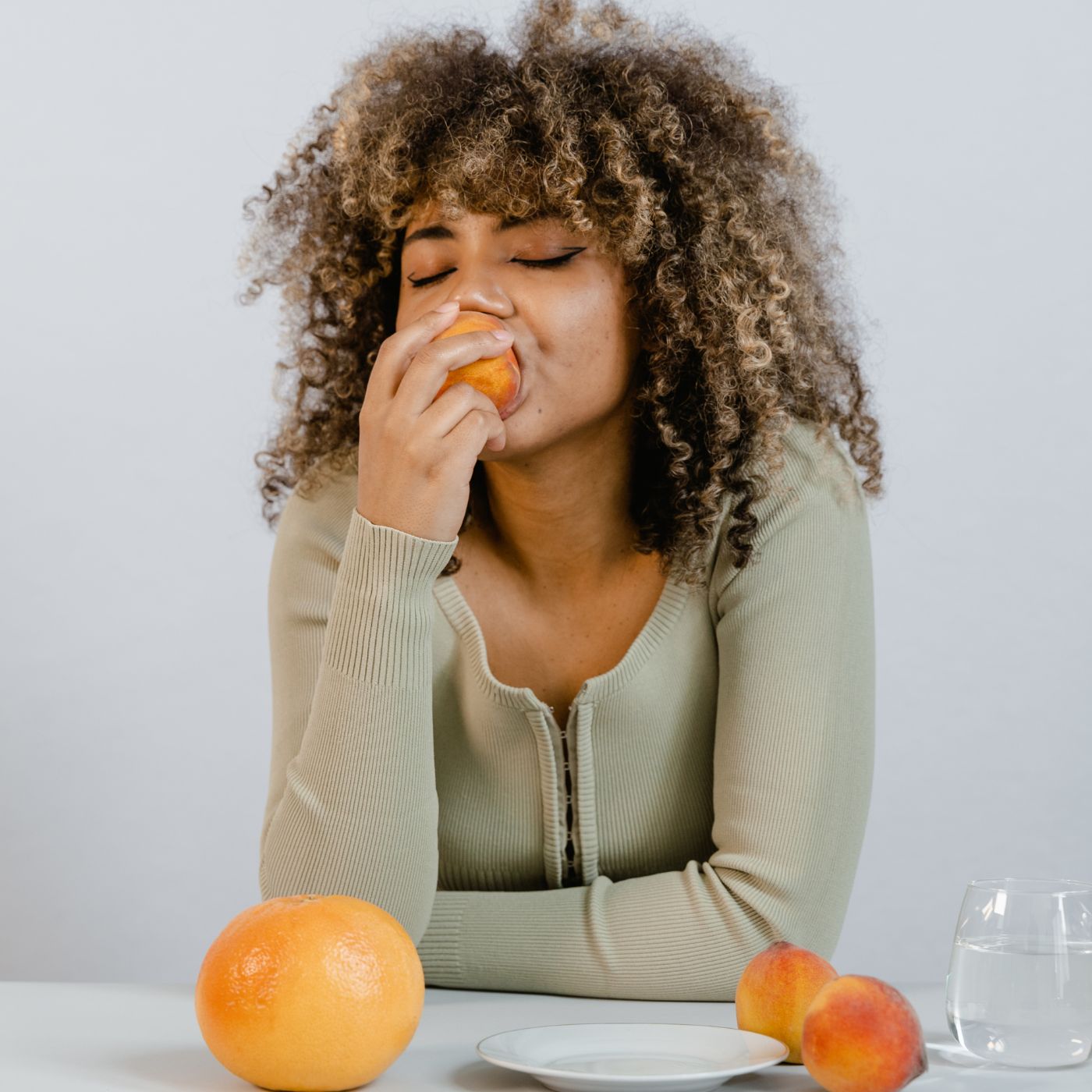
For healthy hair, a diet based on plant-based foods such as fruit, vegetables, whole grains, legumes, nuts, and plant oils is recommended. These foods are rich in antioxidants, anti-inflammatory substances, and secondary plant compounds. The group of polyphenols, in particular, is considered to promote hair growth [2,3]
The following are considered particularly healthy for the hair:
- fresh flaxseeds
- Green tea
- Pumpkin seeds
- Nettle
- Turmeric
- Saw palmetto (e.g., our beauty x cycle)
You should avoid:
- Coffee
- Sugar
- Alcohol
- Dairy products
Are there supplements that help with hair loss?
Generally, the following supplements are recommended for healthy hair:
- Biotin
- Zinc
- Iron
- Vitamin D
However, whether all of them are useful when no direct deficiency exists is debatable. You can find detailed information on micronutrients and nutrition in general for hair loss in our article “Nutrition for hair loss”.
Lifestyle changes
Hair follicles react sensitively to stress hormones such as cortisol. Especially when the effect of estrogen declines, this damaging effect cannot be sufficiently balanced out.
Reducing stress can help—yes, we know, it is easier said than done. But with small moments of relaxation that also promote physical activity, you can already do quite a bit to reduce your stress levels.
- Stress reduction through meditation, yoga, or mindfulness
- Interval training, strength training, and exercise that builds muscle but does not cause additional stress (e.g., yoga, Pilates, light cardio)
The best shampoo against hair loss during menopause
If your hair loss is caused by the declining effect of female hormones, it is important to support the hair follicles in other ways. Because the effect of testosterone becomes stronger, active ingredients that reduce the conversion of testosterone at the hair follicles can be helpful. We developed the grow shampoo specifically for daily hair cleansing. The shampoo should also contain active ingredients that stimulate blood circulation in the scalp and thus the supply of the hair follicles. The shampoo should care for the existing hair and strengthen the hair structure.
Some active ingredients are particularly valuable for hair loss. These are contained in our grow hair shampoo:
- An active complex of bamboo, plant-based keratin, and extracts of butterfly-wing milkweed protects your hair against external influences [4].
- Saw palmetto fruit showed an effect on estrogen receptors in studies and was able to stimulate hair growth in androgen-related hair loss [5].
- Rosemary promotes blood circulation in the scalp, has antioxidant potential, and also has antimicrobial effects [6].
- Nettle leaves act on 5-alpha-reductase and can thus reduce androgen-related hair loss [7].
Care tips for healthy hair during menopause
In addition to choosing the right hair product, you can also support your hair with additional care.
- Use moisturizing hair masks.
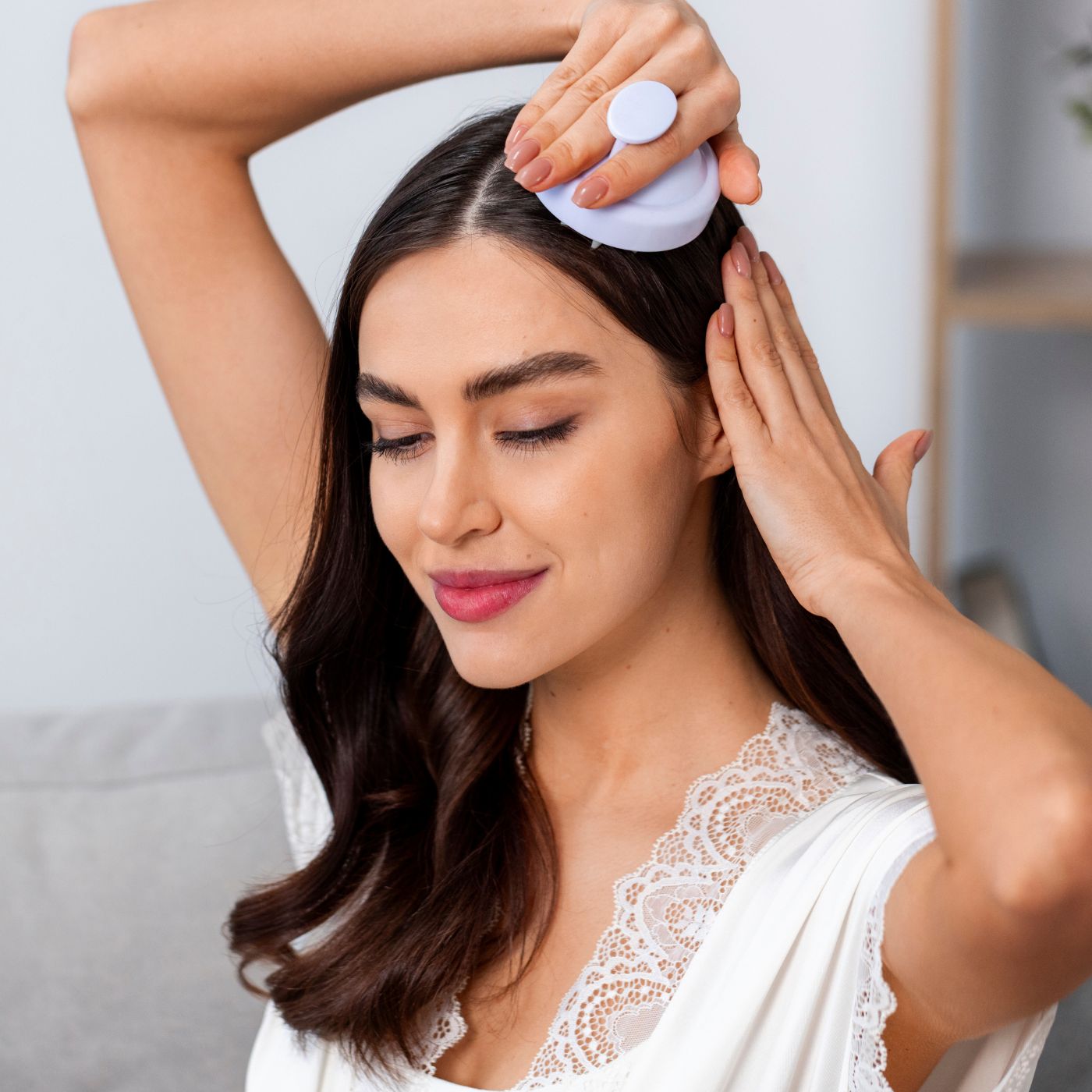
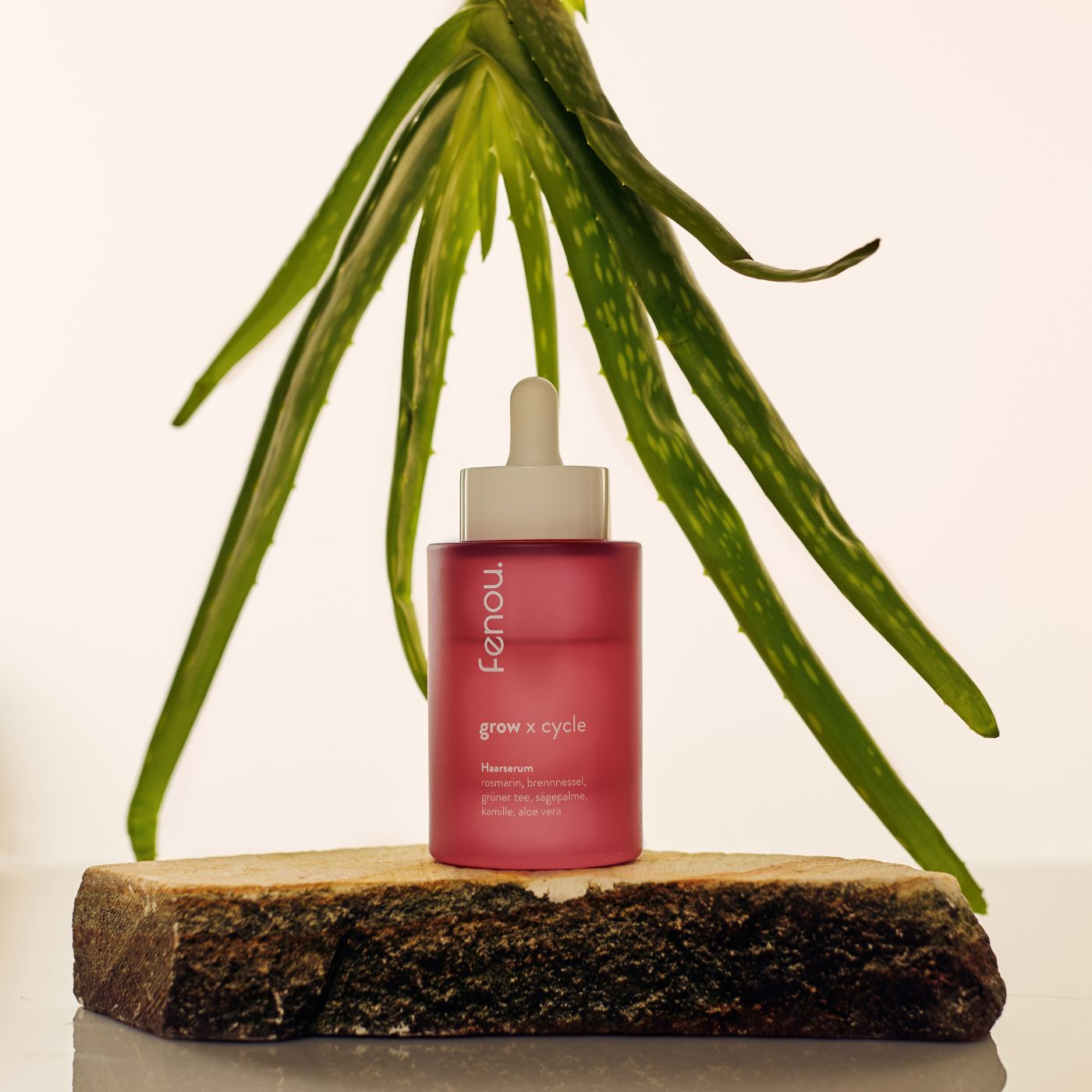
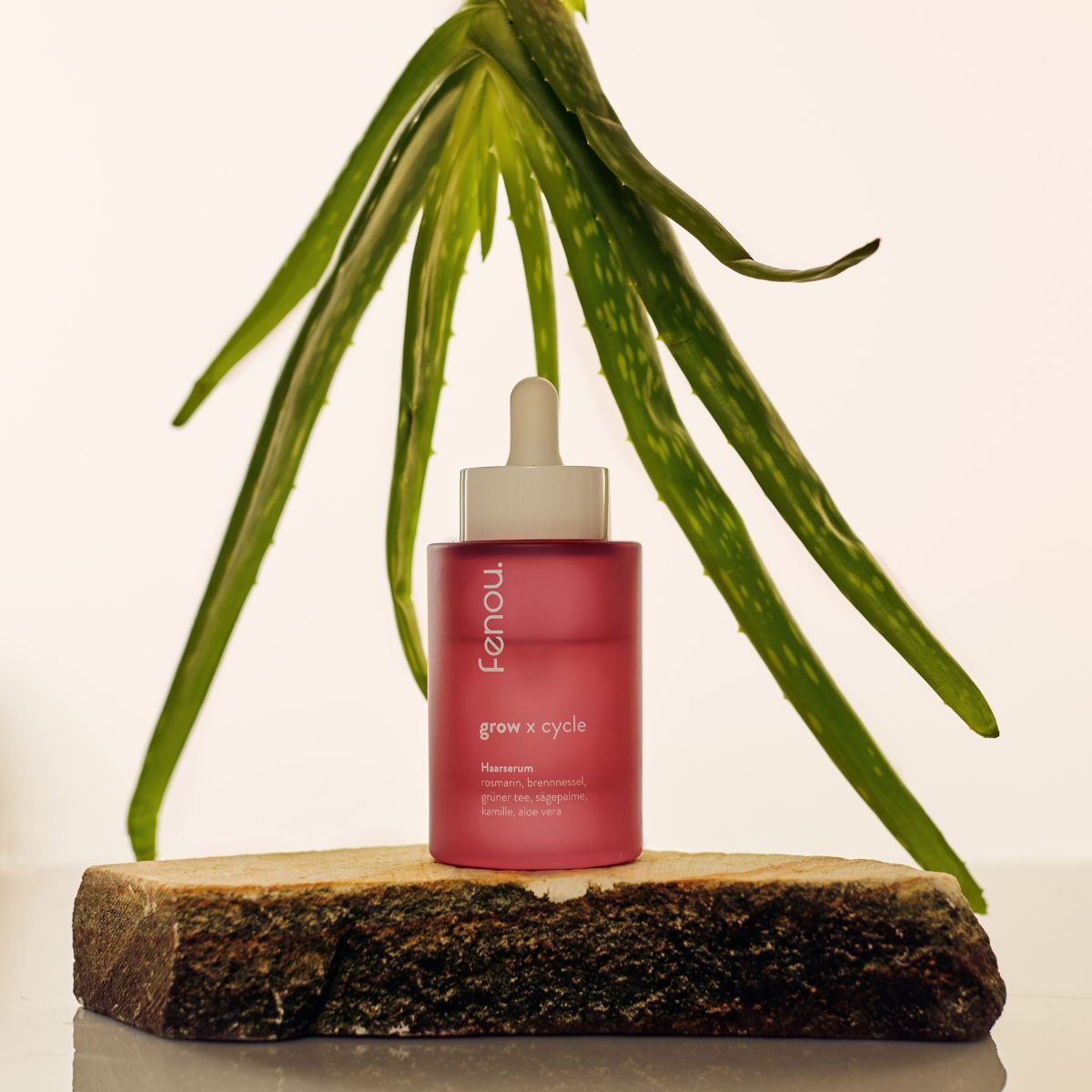
- Regularly massage your scalp with blood-stimulating hair serums or hair tonics. Ideally, these should also contain active ingredients that inhibit the conversion of testosterone, such as the fenou grow hair serum, which can remain on the scalp and does not need to be washed out.
- Avoid hair styling that puts additional strain on the hair, such as intense heat, chemical treatments, or dyeing.
- Avoid hairstyles that pull on the hair roots. Loose hairstyles are better than tight ponytails.
- Protect your hair from UV radiation.
Hair loss during menopause is treatable
Although hair loss during menopause is common, there are many ways to address it besides medical treatment. With the right care, suitable products, and a hair-friendly lifestyle, you can strengthen your hair and promote growth.